


A timber folding screen that explores how a flat surface can open into three dimensions, translating the logic of Kirigami, a type of Japanese paper art, into furniture-grade birch by reworking mountain and valley folds into a series of dowelled joints.
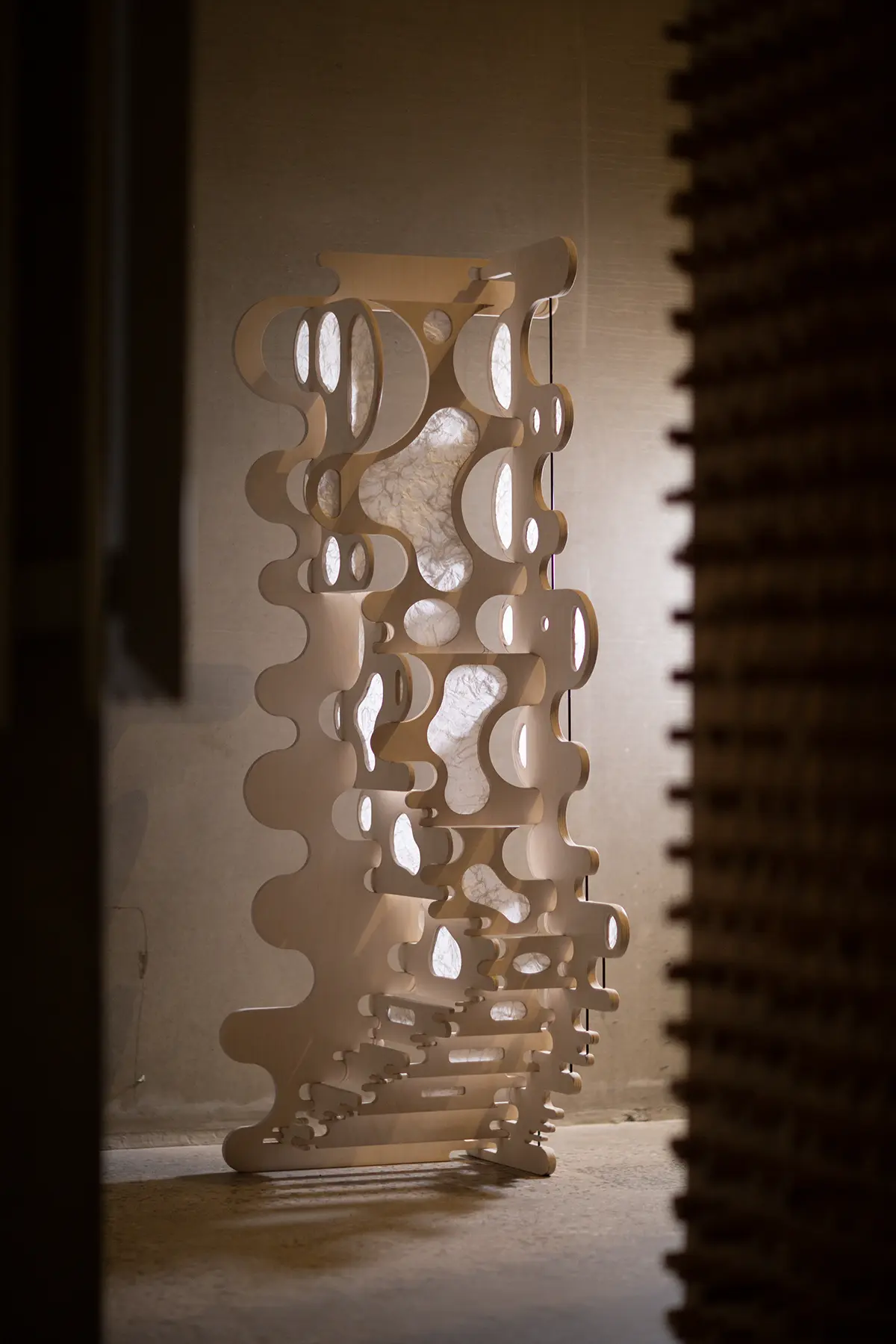
This project began as an exploration into how an object could fold and surprise the viewer by transforming from one geometry to another. At the time, the project was informed by living in a shared apartment where the living room doubled as a bedroom, so the idea of a folding screen was always there in the background, driven by the need for a bit of privacy. What started as a series of experiments gradually became a functional piece that could create a sense of separation within a space.
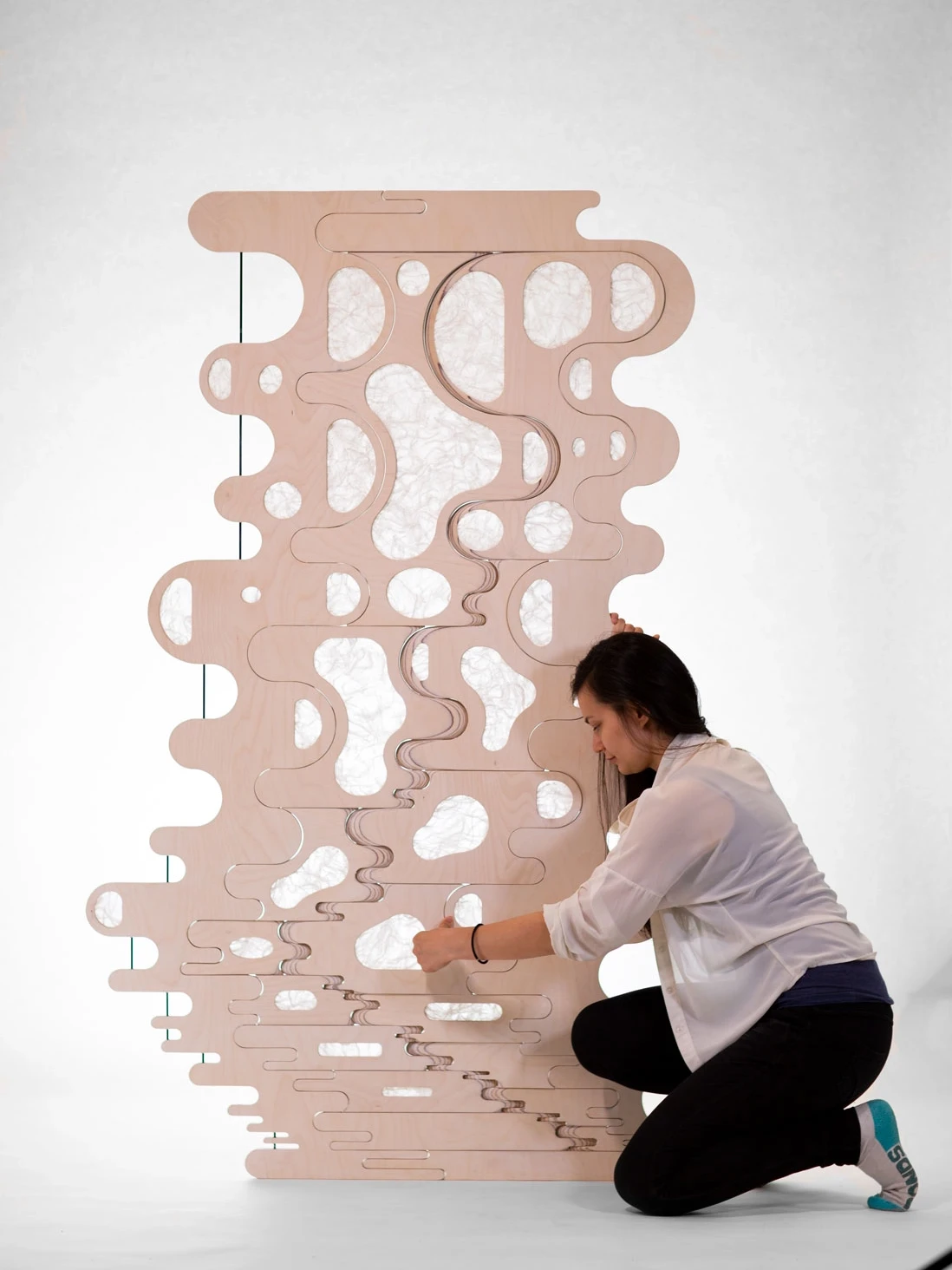
The final piece was made using a blend of traditional and computational fabrication techniques. It is built around a series of elbow dowel joints, where each joint rotates to allow the surface to open. While the timber components were cut digitally, they only fit and moved once the joints were adjusted by hand. This meant extended periods of sanding, along with shaping the elbow taper using an orbital sander to guide how each panel folds. In doing so, the layered structure of the plywood was revealed, forming a surface that resembles an undulating riverbed.
The project developed through a series of experiments, starting with folding patterns in paper before moving into timber. Early tests explored different ways of creating movement, from hinges and kerfing to fabric joints, before settling on the dowel system. Each round of testing revealed new limits and possibilities, gradually shaping how the pattern could work in a thicker material. The final form wasn’t fully predictable, only emerging once the flat surface was able to move. As it opens, the screen shifts from a solid surface to a more permeable boundary, allowing light and interaction to pass between spaces.
Process: Paper studies, hinge testing, prototypes
Outcome: Folding screen (birch, carbon fibre, silk)
Photography:
Shawn Koh
Exhibited at:
Melbourne Fringe Furniture Festival (Finalist, Fringe Furniture Awards, 2018)
Australian Design Centre (Finalist, Workshopped Awards, 2018)
ACMI — Pause Fest (2018)
Shortlisted for:
Melbourne Movement, Salone del Mobile Milano (2018)
Fabrication Location:
The University of Melbourne


